Beating the January Payment Blues: Setting Your Restaurant Up for Success
The start of a new year can catch restaurants off guard with unexpectedly high payment processing fees. Sales often dip, which magnifies the overall percentage fees and reveals hidden or overlooked costs. These quickly chip away at profit margins. January’s arrival also coincides with new statements, rate adjustments, and the lingering expenses from holiday promotions. Restaurant operators can respond by clarifying their processing structures, negotiating better rates, adopting all-in-one payment solutions, and optimizing tipping flows. By reviewing and fine-tuning payment strategies early in the year, restaurants can steady their cash flow and retain more revenue—well before the next holiday season rolls around.
The Post-Holiday Reality Check
Picture your dining room in mid-December: it’s bustling with holiday parties, tourists, and families celebrating together. Then, in a blink, the new year arrives. Festive gatherings evaporate, bills from holiday stocking-ups flow in, and your restaurant’s foot traffic slows. This abrupt contrast is more than just a mood shift—it’s a financial one, too.
Here’s why this is particularly jarring come January:
- Lower revenue multiplies costs: When your total sales decline, certain fees that were neatly tucked away in higher transaction volume suddenly feel weightier.
- New statements with yearly adjustments: January is typically when many processors or acquiring banks finalize changes. A small tweak in your rates can significantly impact your margin.
- Seasonal staff turnover: The holiday rush may have required seasonal hires. With changes to staff after the holidays, you might be paying out tips, final checks, or re-training new servers—all factors that can lead to inefficiencies at the register.
It’s no wonder restaurant owners experience an almost physical “ouch” in January when those processing costs seem to jump overnight. But in many cases, it’s more a reflection of the post-holiday business environment combined with existing fee structures than a blunt rate hike (though those can happen, too).
Why January Payment Costs Suddenly Feel Bigger
One key concept to recall is that payment processing fees are not calculated in a vacuum. If you process $100,000 in credit card sales in December and then $60,000 in January, the total fees appear distorted. Even if your percentage-based processing rates remain the same, the economics of scale or offsetting revenue shrinks—and so does your bank account. That discrepancy makes those January statements painful.
In fact, small differences in net margins can be dramatic when your revenue dips. Consider an example:
- December scenario: $100,000 in credit card sales, with a processing rate of 2.9% plus a $0.30 flat fee per transaction.
- January scenario: $60,000 in credit card sales, same rates as above.
While in December the absolute amount paid in fees might be higher ($2,900 plus transaction fees), it accounted for a smaller percentage of your total monthly costs because your overall revenue was strong. In January, that 2.9% feels more acute: you’re still paying a baseline for each transaction, but you’re pulling in less revenue overall—so the chunk taken out of your bottom line cries out a bit louder.
Plus, if your average ticket size shifts because fewer large holiday orders come in, you might actually see more transactions overall at lower dollar amounts. This accumulates additional per-transaction fees. It’s a double blow: fewer total sales, but proportionally higher costs in fees.
How Restaurant Payment Structures Typically Work
Restaurants often accept multiple payment methods, with credit and debit cards a common choice. Each payment method has its own associated fees, involving interchange costs, processing fees, and occasionally additional monthly or annual fees. Let’s clarify some of the usual mechanisms:
- Interchange fees: Set by credit card networks (Visa, Mastercard, etc.), these are non-negotiable baseline costs that every merchant must pay per card transaction.
- Processor markup: This is where your payment processor or acquiring bank adds an additional fee. Depending on your agreement, it could be a flat per-transaction fee plus a percentage of the sale.
- Payment terminal costs: You might be paying monthly or one-time fees for physical card readers or integrated payment terminals, plus potential maintenance fees.
- PCI compliance fees: Some processors charge money to cover the costs of meeting Payment Card Industry compliance standards.
- Hidden or opaque fees: This can include batch fees, statement fees, or others that are sprinkled throughout the billing process and not always clearly explained.
Come January, many of these fees intersect with your lowered revenues. Moreover, some providers implement new fee schedules at the start of the year or highlight fees that you might have previously overlooked in the swirl of holiday business.
Spotlight on Hidden Fees
Since the holiday season typically keeps you busy with jam-packed dining rooms, it’s easy to miss details in your payment processing statements. Then, when you finally have a moment to breathe in January, you spot line items that weren’t obvious before.
Look closer for:
- Monthly minimum fees: If you don’t meet a specified volume, your processor might charge a penalty or bump your rate to a less favorable tier.
- Early termination fees: This might appear if you switch processors or consider switching, and some contracts auto-renew at the new year.
- Address Verification Service (AVS) fees: Common in card-not-present transactions, but can also sneak in for takeout, delivery, and online orders.
- Cross-border fees: If you serve international tourists during the holidays, those premium costs might hit your January statements.
The first step is to dissect your statements and see exactly where your money is going. Armed with that information, you can approach your payment partners for clarity or renegotiation. If it feels overwhelming, consider consulting a professional who understands merchant statements or using a user-friendly, transparent payment solution—one that integrates directly with your restaurant operations. That’s where an all-in-one tool like sunday can help simplify fees, reduce confusion, and keep you aware of your charges in real time.
Seasonal Slowdowns—and Their Financial Impacts
Not only are you dealing with new or more transparent fees, but your daily turnover likely sees a significant drop post-holiday. Fewer reservations and walk-ins mean that your staff hours might be trimmed, potentially leaving you with less flexibility to handle front-of-house tasks. In essence, everything feels a bit tighter in January.
This wave of emptier tables and narrower margins also means you can’t absorb additional costs as easily. For example, if your rent is the same in January as it was in December, you’re suddenly paying a higher share of your fixed expenses with reduced income. Add in the credit card processing fees, and it’s a prickly cocktail for your finances, especially if you haven’t budgeted for it.
According to the National Restaurant Association’s research (their official research page), the restaurant industry typically experiences slower traffic in the first quarter, with January often cited as one of the most challenging months for both foot traffic and average check size. It’s no surprise many operators do annual cost reviews at this very time—deliberately or not—to see where they can reduce overhead or rework processes.
The Power of an All-in-One Payment Solution
While many restaurants piece together a patchwork of separate tools—POS, payments, reservation systems, loyalty programs—this approach can inadvertently compound your costs and administrative complexity. With sunday’s all-in-one solution, you get:
- Clear, transparent fees: No more rummaging through half a dozen statements to figure out that new $0.05 or $0.10 is creeping in per transaction.
- Streamlined tipping: Tipping can represent a significant portion of servers’ take-home pay. Making tips easy to add and manage fosters happier staff and often bumps up total tips.
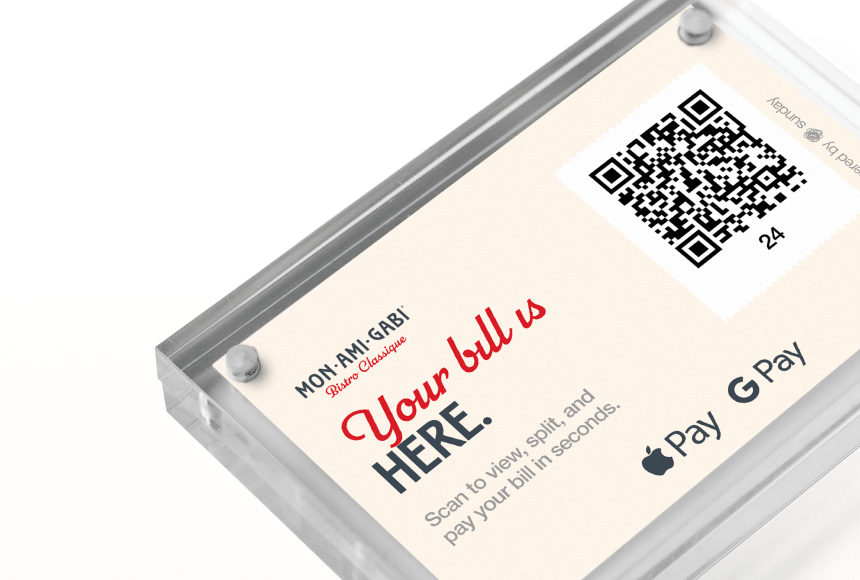
- QR code payments: Speedy payments that let guests check out on their timetable, removing friction from the customer experience. This can open up your table turnover potential.
- Google review prompts: Right after paying, diners can be directed to leave a Google review, which is invaluable marketing for your restaurant.
By merging multiple payment-related tasks into a single, user-friendly interface, you ease staff training, reduce administrative headaches, and get a fuller picture of your financial health in real time. That’s especially helpful in January, when you’re already juggling new-year audits and cost reviews.
Practical Ways to Offset Payment Costs
These spikes in processing fees do not have to become your January tradition. Let’s look at tactics you can put in place to soften the blow:
1. Negotiate Your Rates
You might already know your per-transaction rate, but it’s worth exploring potential changes as your business evolves. If you have a track record of consistent volume—even with the January dip—you could be eligible for a lower processor markup.
- Collect data: Have 3 to 6 months of sales volume on hand, showing your average transaction size and total monthly card sales.
- Request clarity: Make sure you understand interchange fees vs. markup. Pin your processor down on exactly what you’re paying for.
If the conversation stalls, consider exploring other providers—sometimes the mere act of comparison can motivate your current one to offer a better deal. “Bundle” rates, in which your card processing and other services combine, can be advantageous, but only if you can verify transparency in the costs.
2. Reassess How You Handle Tips
Tips are a significant part of the server’s take-home pay and can also factor into managing credit card fees. Some restaurants handle tips in cash, while others prefer everything on-card for simpler record keeping. Each approach has pros and cons:
- On-card tips: Streamlined at payroll time, but you’ll pay processing fees on tip amounts as well. Keep in mind those fees can add up quickly.
- Cash tips: Potentially no extra card fees, but can require more staff time to reconcile and can be less convenient for customers who rarely carry cash.
A balanced approach might be encouraging both forms of tipping, but giving guests a seamless digital experience—like scanning a QR code, choosing a tip level, and quickly signing off. The easier you make it, the more likely your guest is to leave a generous gratuity. Meanwhile, you’re able to keep an eye on the real costs involved in each transaction.
3. Seek Surcharge or Cash Discount Programs
Consider the potential of a surcharge or discounted rate for cash payments. Some operators in the US now apply a slight fee (for instance, 3%) on card transactions to cover processing costs, while discounting menu prices if the customers pay with cash. Check your local and state regulations first—some states do not allow surcharging. Done appropriately, these programs can meaningfully reduce your net fees, but it demands clear communication with your guests.
A catfish-sandwich lover might be happy to pay $12 on a credit card, or they can get it for $11.70 with cash. If you’re 100% transparent, many people won’t mind the slight difference. That said, weigh the potential friction it might generate. If your guest experience is strongly tied to convenience, you’ll want to tread carefully.
4. Optimize Transaction Volume
Frequent small transactions can accumulate more flat per-transaction fees. If you do a lot of to-go or curbside pick-up orders, grouping items onto a single check at your own kiosk or letting guests easily add afterthought items can cut down on separate smaller charges. The fewer, bigger tickets you can process, the less you pay in per-transaction fees. By offering easy reordering or bundling options, you not only reduce fees but can boost the average check size as well.
5. Train Staff on Payment Protocols
Beyond front-of-house best practices, make sure your team knows how to handle partial approvals, declined cards, and other hiccups. Every time a transaction misfires, you risk incurring extra fees to correct the situation. A quick refresher in January can save you from unnecessary statements showing repeated declines or forced transactions.
Planning Ahead: Strategies for Long-Term Cost Savings
Managing your payment fees during the slow season doesn’t have to be a one-time scramble. Use January as the kickoff for a year-round plan to reduce friction and maintain a healthier profit margin. Here are some additional strategies:
- Analyze monthly statements consistently: Don’t wait until January to look at your line items. Regular check-ins help you catch creeping fees early.
- Budget for seasonal dips: If you know January is historically slow, factor that dip into your annual budgeting. Spread out major expenses so they’re not all hitting in the same month.
- Offer special January promotions: Give customers a reason to dine out when it’s cold and quiet. A brunch special or a limited-time dinner offering can buoy sales and help offset the cost ratio of your credit card fees.
- Leverage new technology smartly: Instead of tacking on disconnected systems, look for solutions like sunday that unify your payment flow, tipping, and marketing feedback loops. Centralizing means less overhead and fewer hidden costs scattered across multiple vendors.
- Stay updated on industry trends: Card networks like Visa and Mastercard sometimes adjust interchange rates in the spring or autumn. Knowing what’s on the horizon can help you negotiate or adjust in time.
You can also learn from your colleagues, whether in an official restaurant association or in informal local meet-ups. If someone orchestrated a major shift in their payment platform to reduce fees, they might have valuable insights on the pros and cons that you won’t find on a sales brochure.
According to a feature from FSR Magazine, more restaurants are modernizing their payment systems at a growing pace, partly because the new generation of solutions integrates marketing, loyalty, online ordering, and contactless payment methods. Over time, those efficiencies can lower your overall cost of doing business—particularly in the dreaded January slump.
| Month |
Typical Sales Variation (Approx.) |
Payment Impact |
| December |
+20% (Holiday Rush) |
Higher volume masks fees |
| January |
-10% (Seasonal Dip) |
Fewer transactions magnify processing costs |
| February |
+5% (Valentine’s Day) |
Short spike, then normalizes |
This rough illustration shows how sales fluctuations play out over different months. Of course, specific numbers vary by region, concept, and marketing efforts. But the essence remains: January brings a combination of lower sales and fresh cost discoveries, making it a prime moment to address operational inefficiencies.
FAQ: Your Questions, Answered
1) Are my January costs really rising, or am I just noticing them more?
It can be both. In many cases, rates and fees reset or get adjusted after the holidays, which can mean genuine changes in what you owe. At the same time, your post-holiday lull likely makes your existing fees feel a lot bigger because there are fewer sales to cushion the expense.
2) How can an all-in-one solution like sunday help reduce fees?
By consolidating your payment processes in one place—point of payment, tipping features, and even review prompts—an integrated solution gives you clear visibility of your total costs. You’re less prone to sudden or unexplained charge spikes since you’re not juggling multiple vendors.
3) Why does it matter if I process many small transactions?
Every swipe or dip of a card often includes a fixed per-transaction fee on top of a percentage rate. If most of your checks are small, you might be paying that fixed fee numerous times each day, driving up your total costs proportionately more than if those transactions were combined.
4) Is surcharging legal in my state?
It depends. Some states in the US allow you to add a surcharge to help cover payment processing fees, while others impose legal restrictions on the practice. You’ll want to confirm local regulations. If surcharging is allowed, be transparent with your customers to avoid misunderstandings.
5) Should I just stick to one payment processor for everything or shop around?
Competition can work in your favor. Shopping around helps you stay informed about market rates, new technology, and better contract terms. If your existing provider can match or beat those offers, great—even better for your business. The key is transparency and understanding precisely what you’ll pay month after month.
6) How can I prepare in advance to avoid the January blues?
Start by budgeting for a lower volume of sales right after the holiday season. Make sure you review your existing contract to see if any new rates or fees will apply in January. You might also plan a small promotional campaign during the slow season to boost revenue, which helps maintain a healthier ratio of processing costs to sales.
7) Can a system like sunday boost table turnover too?
Absolutely. With a quick, contactless way for guests to pay, you can shave minutes off each table’s experience, especially when servers are busy. The combined effect can yield faster table turnover—which means you seat more guests, boost total sales, and offset credit card fees on a volume basis.
8) Is it normal to feel swamped by payment statements?
Yes. Restaurant operators are busy people, and payment processing can get technical. That’s why clarity and simplicity are key. If you find your statements confusing, seek out more transparent solutions. You deserve to understand, easily and completely, every line item that’s coming out of your pocket.
January’s payment blues don’t have to be your annual tradition. By digging deeper into your statements, negotiating better terms, and leveraging an integrated platform such as sunday, you give your restaurant the strongest possible foundation to thrive—even during those quiet, chilly months. Enjoy the satisfaction of cutting down on unexpected costs and freeing up resources for what truly matters: serving amazing food, delighting guests, and keeping your business growing all year round.


 1min
1min