How sunday’s pay at table system drives restaurant revenue
Most restaurants invest heavily in the menu, the fit out, and the team. The payment moment gets far less attention yet it is the one touchpoint every single guest experiences, every visit. Done well, it drives more than a completed transaction: tips increase, table turns improve, reviews accumulate, and guest data flows into the business for the first time.
Here are the key takeaways.
The checkout gap: Most table service restaurants still handle payment manually, creating a bottleneck that costs time, cover capacity, and tip income.
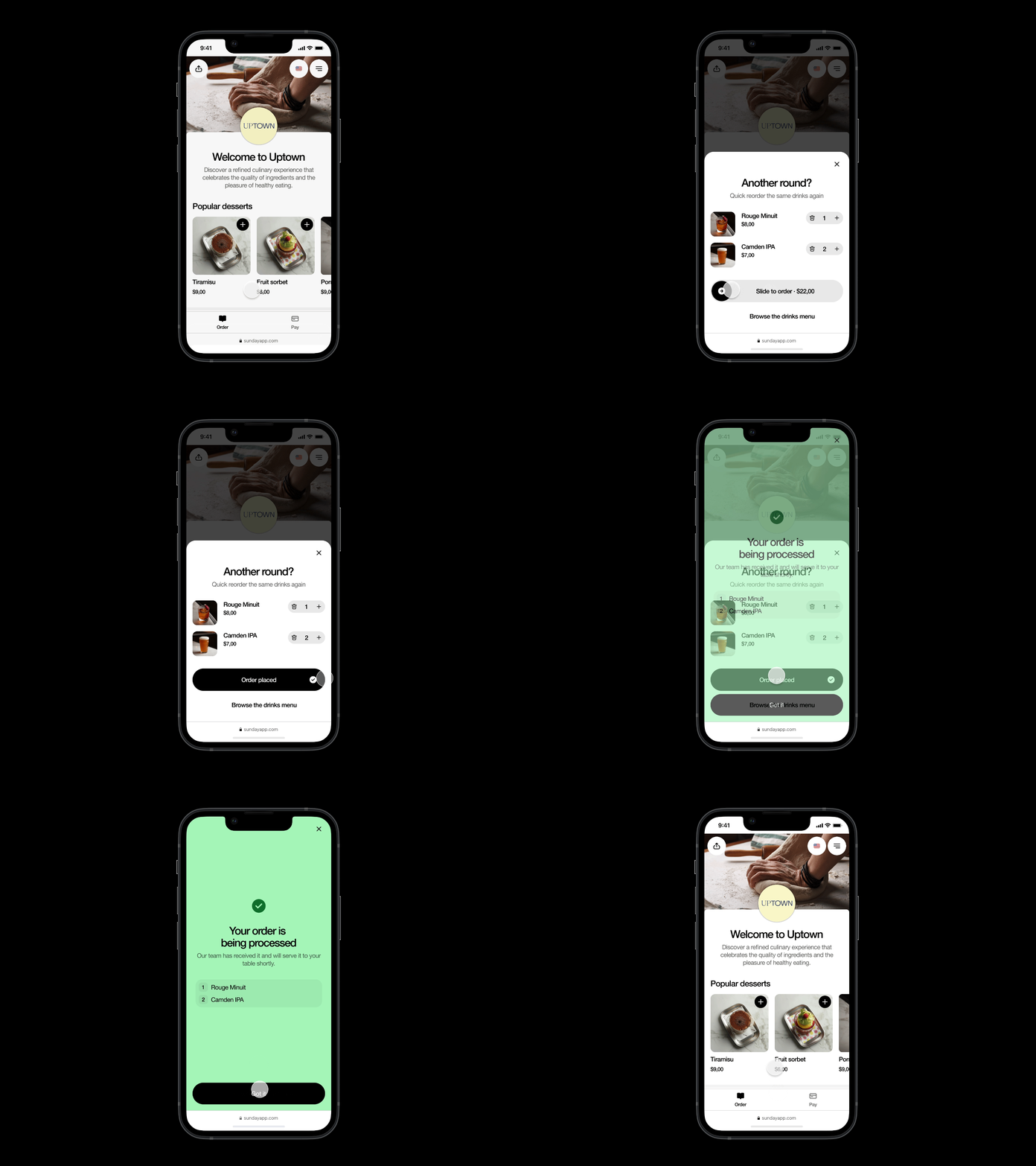
Pay at table system: It gives guests full control over reviewing, splitting, tipping, and paying , without waiting for staff.
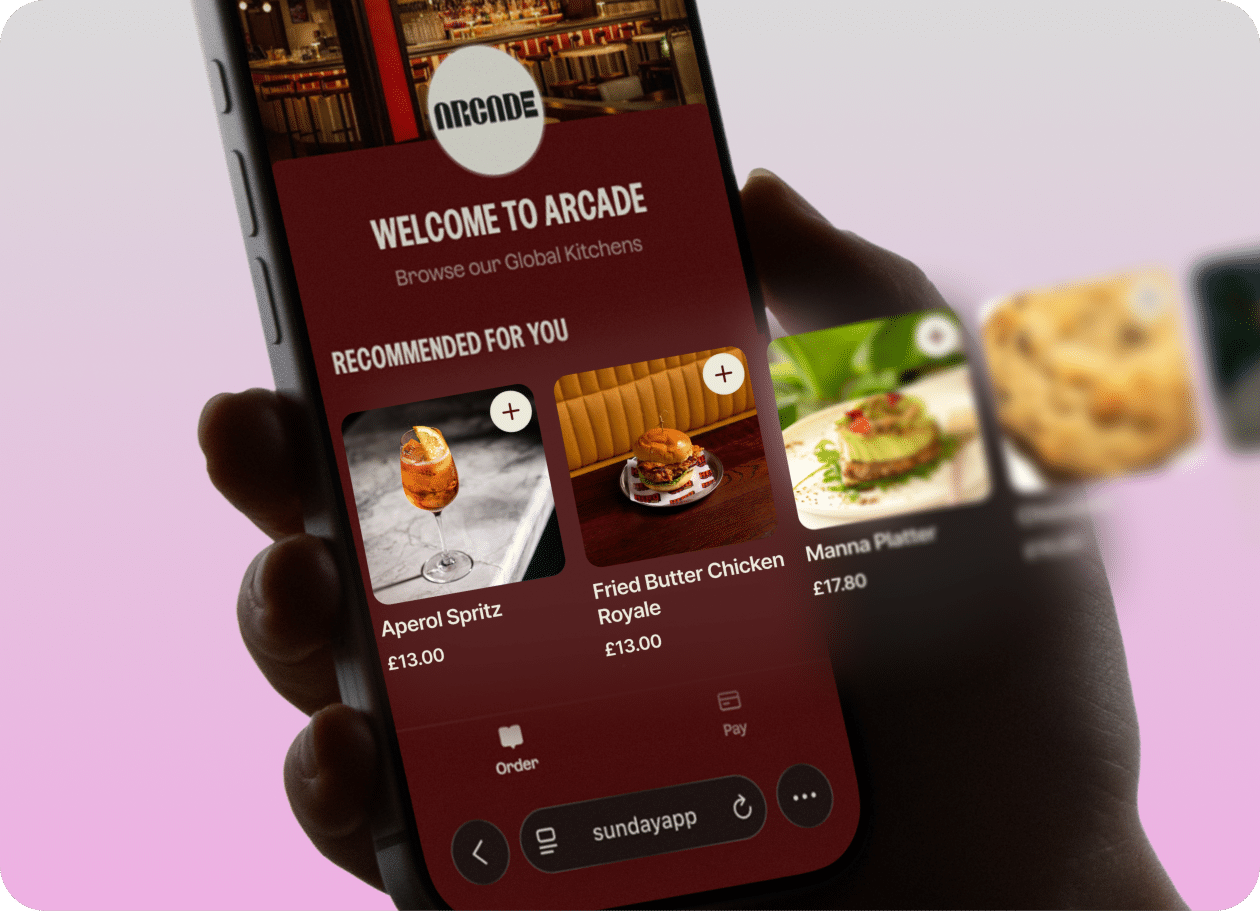
Average spend: When guests browse and pay at their own pace, they tend to spend more. Brewski saw a +21% lift in average spend per head; Arcade saw +27.3%.
Tips: Digital tipping prompts within a pay at table system produce higher gratuities than traditional card machine flows, particularly in the UK where cash tipping has declined.
Table turns: Removing the payment bottleneck saves 5 à 8 minutes per table, which translates into additional capacity at busy services.
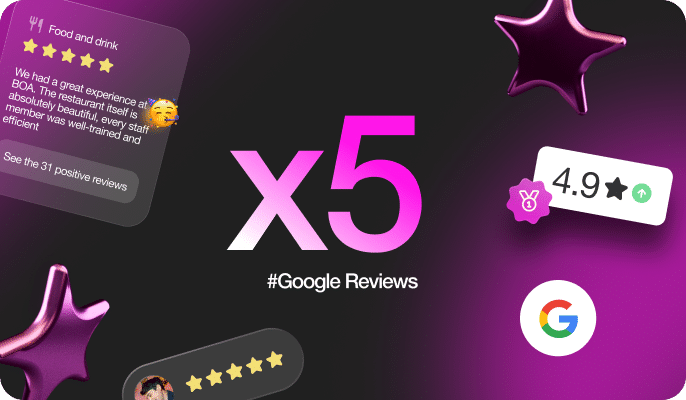
Google reviews: The post payment moment , when guest satisfaction is at its highest , is the most effective point to request a review. Kricket tripled its Google reviews at its Brixton site within one month.
Guest data: Email capture at checkout gives restaurants a direct channel for loyalty, re engagement, and CRM.
What most restaurants lose at the checkout stage
The checkout stage is where service most often breaks down. A guest who has spent 90 minutes enjoying a meal is, in the final few minutes, waiting: for a member of staff to notice they are ready, for the card machine to arrive, for receipts and change. This waiting is not neutral.
Every minute spent on payment admin is a minute staff cannot spend on hospitality. From a capacity standpoint, tables that are occupied but not turning cost real revenue during peak hours. In a traditional service flow, the bill can take five to ten minutes from the moment a guest signals they are done to the moment the table is cleared. Across a 50 cover restaurant running three services, that adds up to a significant loss of capacity per day.
The tipping gap in UK restaurants
Cash tipping was already in structural decline before contactless payment became standard in the UK. Once most payments shifted to card, the natural moment for leaving a tip disappeared. Traditional card machines sometimes prompt for a gratuity, but the experience is rarely comfortable. The machine arrives at the table, the prompt appears briefly on a small screen, and many guests decline because the moment feels pressured rather than personal.
A pay at table system surfaces the tipping prompt in a different context: the guest is reviewing their own itemised bill at their own pace, and the tipping step appears as part of a flow they are leading. That shift in context produces a measurable difference in behaviour , and in staff income.
The review window: turning payment into reputation
The best moment to request a review is immediately after payment, while the experience is fresh and the guest is still at the table.
Most restaurants rely on guests to leave reviews independently , hours or days after the meal, when the emotional connection has faded. By integrating a review prompt into the post payment flow, restaurants capture feedback at peak satisfaction, when guests are most willing to take 30 seconds to share their experience.
sunday’s online reputation tools route satisfied guests to Google, while lower rated internal feedback is kept private for the operator to act on. The result is a consistent increase in review volume without staff needing to ask in person.
At Kricket, Google reviews tripled at the Brixton site within the first month of using sunday. Around 70% of their 5 star reviews now come from sunday guests. As co founder Rik Campbell notes: “Reviews are everything. They’re often the first impression guests get of your restaurant. Since using sunday, we’ve seen a huge improvement.” At Brewski, around 150 Google reviews per month are generated through the platform , 71% of the total , maintaining a consistent 4.9 rating.
A high volume of recent, high quality reviews compounds over time. It improves local SEO ranking, builds social proof for new guests, and creates an internal feedback loop that helps operators spot service issues before they escalate. For UK restaurants operating in a market where nearly 50% of consumers are eating out less due to financial constraints (Statista, 2023), every visit counts , and so does every review.
Treating checkout as part of the experience
Payment is the last moment of every guest visit, and for most restaurants, it is also the least considered. The evidence from UK operators shows that changing how checkout works , making it guest led, digital, and connected to reputation and data tools , produces measurable improvements across spend, staff income, capacity, and online visibility.
A pay at table system is the infrastructure that makes this possible. The real opportunity is in treating the payment moment as part of the guest experience, not a formality that happens after it.


 4min
4min