Accelerate Your Weekend Service with QR-Based Payments
During busy weekends, slow payment processes often create bottlenecks and impact table turnover. Embracing QR code payment options can remove these friction points, letting guests settle the bill faster and tip seamlessly. QR payments also allow your servers to spend more quality time with diners, enhancing the overall experience. In addition, digital payment methods often increase the average spend because they’re quick and transparent. Owners benefit from more efficient seatings, reduced wait times, and a smoother staff workflow—as well as better online visibility if diners are prompted to leave reviews. Ultimately, QR payments help restaurants handle peak service like a dream.
1. Understanding the Weekend Rush
Before we delve into QR code technology, let’s take a moment to acknowledge the reality of peak times. Weekends bring both opportunity and stress:
- Heightened Demand: More guests flock to your restaurant, often requiring that you handle larger parties or rapid seat turnover.
- Increased Staff Workload: Even an experienced team can feel overwhelmed when juggling new orders, customer queries, and payment processing all at once.
- Pressure on the Payment Terminal: In many traditional setups, a single payment terminal or two may cause a logjam. The server must queue to use it, while guests wait their turn. Every minute counts.
These constraints can lead to delayed seatings and longer wait times, ultimately impacting your restaurant’s overall revenue potential. According to a 2022 report by UK Finance, contactless payments were used in nearly 58% of all credit card and 72% of all debit card transactions in the UK. As diners become more used to tapping and scanning their way through everyday purchases, a payment bottleneck feels more out of place than ever.
2. What Exactly Are QR Payments?
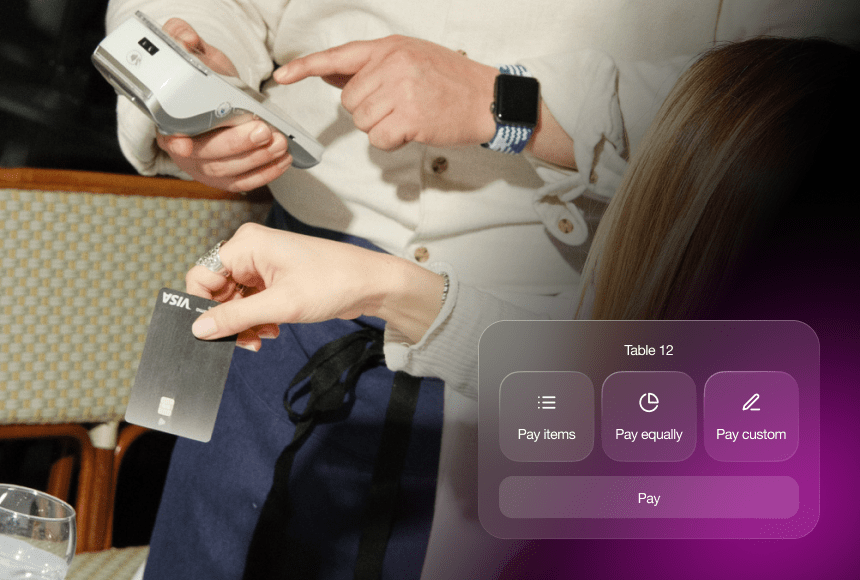
QR code payments involve a customer scanning a code with their smartphone and completing the transaction online. Instead of relying on the server to bring over a physical payment terminal, the diner performs these steps independently:
- Scan the Code: A guest points their phone camera at a QR code located on or near the table, or on the bill.
- Open the Payment Page: The code instantly directs them to a secure webpage where they see the itemised bill.
- Pay & Tip: They choose their preferred payment method—often a saved card, Apple Pay, Google Pay, or even their digital wallet—and confirm. They can also add a tip if they wish.
- Optional Extras: Some systems, like the one offered by sunday, enable diners to leave a quick Google review or share feedback directly.
No more waiting for a payment terminal; no more handing over a physical card or fiddling with paper receipts. It’s efficient, safe, and frictionless.
3. Why Speed Matters for Table Turnover
Time is the ‘secret sauce’ in every restaurant’s weekend rush. You’ve likely calculated how long a party of four usually dines and how much time your servers have to flip the table for the next booking. Payment alone could eat up an extra 5-10 minutes per table if the process involves multiple steps. Sometimes, diners are forced to wait for the server to return with the card machine, which might be busy at another table.
By adopting QR payments, you can bring that final step down to a minute or two. A short, user-friendly payment experience leads to:
- Quick Customer Turnaround: Eliminating the back-and-forth with a physical terminal can free up precious minutes, allowing your next group of diners to sit sooner.
- Smoother Teamwork: Servers can focus on delivering top-notch hospitality rather than chasing payment devices or printing multiple receipts.
- Higher Guest Satisfaction: Many people appreciate the ability to pay on their own terms—no need to flag down a busy server or wait for a card to be processed.
4. The Hidden Benefits of QR Payments
Beyond speeding up table turnover, adopting QR payments can bring other valuable advantages, often overlooked in the hustle of weekend service:
- Accuracy and Transparency: Guests see an itemised bill on their phone, reducing disputes over splits or item mistakes.
- Encouraged Tipping: With a visible tip prompt, customers may be more inclined to leave a gratuity. Because the tip option is present at the point of payment, it’s simple to add or adjust the amount without any awkward pressure.
- Promotion of Loyalty and Engagement: If your QR payment page links to a survey or Google review, you’re tapping into your guest’s immediate experience. Their enthusiasm or appreciation for the meal is still fresh, making them more likely to share positive feedback.
- Reduced Contact Handling: Since the pandemic, many diners have grown to prefer minimal contact transactions for hygiene reasons, making QR payments feel safer and more up to date.
Taken together, these features ensure your operation feels modern, guest-focused, and transparent—a recipe for building trust with customers.
5. Comparisons: Traditional vs. QR Payment Process
Let’s illustrate the difference. While it can vary depending on your specific workflow, the table below gives a rough comparison of the main steps in paying by a standard POS terminal versus using QR codes:
| Payment Method |
Key Steps |
Estimated Time Spent (Per Table) |
| Traditional Card Process |
- Server prints bill and brings it to table.
- Guest requests card payment.
- Server fetches payment terminal (if free).
- Card is inserted or tapped, tip input if desired.
- Receipt printed, possibly requiring a signature.
|
5-10 minutes |
| QR Code Payment |
- Server or table display shows QR code.
- Guest scans with phone camera.
- Bill appears on screen, tip added digitally.
- Payment confirmed, optional review prompt.
|
1-2 minutes |
With the quick-scan approach, you’re drastically cutting down the waiting game. Over a night of full seatings, saving a few minutes per table can add up to one or two more seatings in total—especially crucial when your weekend lines are long.
6. Real-World Case: Streamlining a Local Brasserie
Imagine a bustling brasserie in central London, where the reservation list is crammed weeks in advance for Friday nights. Staff used to rely on two payment terminals for 15 to 20 tables at a time, and the queue for the machines sometimes forced anxious diners to hold off on finalising their bills. This standstill resulted in:
- Long waits to settle up, especially in peak hours.
- Staff stress, with servers rushing between tables.
- Reduced table turnover, meaning fewer guests seated overall.
After introducing QR code payment options, the brasserie noticed a significant shift. Once the main course was done, diners wanting to pay the bill scanned and settled up. The staff were free to focus on ongoing service instead of ferrying payment terminals around. Result? A consistently faster turnover and an uplift in tips. This example is not unique; many restaurants across the UK have seen similar positive outcomes.
7. Overcoming Potential Hesitations About QR Payments
It’s natural to wonder about potential pitfalls in technology adoption. Let’s address a few common questions:
7.1 Will Older Guests Struggle with QR Codes?
Although some older diners might feel wary, most modern smartphone cameras automatically recognise QR codes. Even if a guest is hesitant, your staff can offer a quick, helpful demonstration: “Just open your camera app, point it at the code, and a link will pop up.” After one or two experiences, the method feels intuitive.
7.2 Is It Secure?
Yes, reputable QR payment solutions rely on secure websites and encrypted transactions. It’s arguably safer than handing your card to a server you do not know. Always partner with well-established service providers who comply with PCI (Payment Card Industry) standards and use secure payment gateways.
7.3 Do I Lose the Human Touch?
Not at all. Your staff remain available for questions and hospitality. By offloading the mechanical steps of payment, you leave more room for friendly conversation and ensuring your guests’ satisfaction. QR payments don’t replace staff; they empower them to deliver better service.
8. Encouraging Feedback and Reviews
There’s another hidden gem: once patrons pay digitally, you can prompt them to leave a quick Google review. We all know that a restaurant’s rating can swing potential customers’ decisions. The easier you make it to leave feedback, the more reviews you’re likely to receive.
For instance, sunday integrates the option to leave a review right after a payment. Guests simply tap through and share their thoughts. This is particularly useful during a weekend rush—when you likely have more customers—and it helps you build a strong online reputation.
9. Handling Gratuities in a Digital Age
In the UK, tipping culture varies widely, but most diners recognise the importance of rewarding good service. Digital tipping features within QR payment platforms can boost the overall tip you collect, as the suggestion is integrated into the process. Rather than rummaging for spare change, guests skip straight to an on-screen suggestion—be it 10%, 12.5%, or a custom amount.
This straightforward interface can lead to higher tips, while ensuring fairness and transparency. It also spares your staff from awkward guesswork about gratuity policies, giving them more control over how they’re compensated for the level of service they provide.
10. The Role of POS Systems and Integration
One might assume that adopting QR codes requires dismantling or heavily modifying your existing POS system. That’s not necessarily true. Many QR payment platforms integrate seamlessly with a variety of restaurant management software options. Key benefits of integration include:
- Automatic Checks: Items immediately appear on the digital bill the second they’re keyed into the POS.
- Accurate Sales Data: Sales reconcile in real-time, reducing manual data entry or shift-end calculations.
- Inventory Control: Quick sales updates help maintain correct stock levels—especially crucial on a busy Saturday night.
You’re not swapping out your entire payment flow. Instead, you add a convenient alternative that orchestrates well with the systems you already trust.
11. Enhancing the Guest Experience
While saving time and reducing staff pressure are vital, let’s not forget the diner’s perspective. When someone visits your restaurant, the final impression is often formed by how smoothly the payment wraps up. If it’s a hassle, that’s how they’ll remember it. If it’s seamless and quick, they’re more likely to leave on a high note—perhaps even ordering that extra dessert next time.
A memorable final interaction can make guests feel:
- Respected and In Control: They pick the moment to pay once they’re ready—no embarrassment over trying to catch a busy server’s attention.
- Grateful for Speed: Immediate closure of the bill means less time hanging around at the end of a meal.
- Open to Return: A frictionless payment enhances loyalty, as people prefer to revisit spots that respect their time.
12. Practical Tips for Introducing QR Payments
Once you decide to implement QR code payments, you’ll want the rollout to be just as smooth as the final user experience. Consider these practical pointers:
- Train Your Team: Make sure your servers understand how QR technology works, the benefits for themselves (like tips, less running around), and common troubleshooting approaches.
- Place QR Codes Clearly: Whether you incorporate them on table signage, receipt-like slips, or digital devices, keep them easily visible. The design should be tidy and scannable.
- Provide a Friendly Script: Brief servers on a simple explanation: “Just open your camera, point at this code, and you can pay instantly—let me know if you need any help.”
- Test During Off-Peak Hours: Launch this during a quieter slot to train staff and ensure everything runs smoothly before the weekend wave arrives.
- Offer Choice: Some diners may still prefer the traditional payment terminal. Having both enhances inclusivity.
13. Handling Common Tech Issues
Despite best efforts, technology can misbehave. Here’s what to do if something goes amiss:
- Slow Internet: If your Wi-Fi signal is patchy, provide an alternative sign-on or a stable 4G/5G environment. Many modern smartphones can handle the transaction without Wi-Fi if mobile data is sufficient.
- Code Not Scanning: Check for glare or poor lighting. Printing the code in a larger size or placing it under a small light can resolve scanning issues.
- Payment Page Error: Rare but possible. Encourage the guest to refresh the link or re-scan the code. Offer a backup method if the problem persists.
A calm, well-informed team can tackle these hitches with finesse, ensuring the diner feels reassured rather than frustrated.
14. Building Trust with Transparent Data
Restaurants that adopt digital payment methods also gain data insights into guest behaviour. Although privacy must be respectfully upheld, aggregated data can shed light on:
- Average spend per table and popular menu items.
- Peak hours and areas of improvement in staffing.
- The proportion of guests who leave tips, and how much.
Crafting promotional strategies or deciding staff shifts becomes more precise with reliable data. Meanwhile, your staff maintain confidence by seeing accurate tip distributions reflected in their end-of-day reports.
15. The Role of sunday in Modern Restaurants
Over the past couple of years, sunday has made a name for itself by providing restaurants with a user-friendly QR code payment solution. True to its promise of simplicity, it streamlines the entire payment process: from scanning to tipping to optional Google reviews. This approach helps restaurants across the UK reduce waiting time for payments, boost table turnover, and foster stronger guest relationships.
Because sunday can integrate into many POS systems without the need for complex hardware changes, the transition is relatively stress-free for both staff and guests. Whether you run a cosy brunch café or a Michelin-starred hotspot, having a quick-scan, no-fuss payment process during your busiest shifts is a game-changer.
16. Looking to the Future of Dining
Payment technology is evolving rapidly. The rise of contactless and mobile payment has accelerated consumer expectations, so long wait times at the end of a meal increasingly look old-fashioned. As a savvy restaurant owner, staying on top of these trends not only helps you remain competitive in a crowded market but also encourages repeat business. People appreciate forward-thinking venues that respect their time and modernise where it counts.
At the heart of all these innovations is an important message: using new technology is not about diminishing personal connections—quite the opposite. By handing over a minor but time-consuming chore (payment handling) to a seamless digital system, you and your staff have more space to focus on personalised service, special requests, and human interaction. Ultimately, that’s what high-quality hospitality is all about.
17. Measuring the Impact
Once you implement QR payments, track specific metrics to gauge success. Some angles to consider:
- Reduction in Payment Duration: Compare average table payment times before and after the rollout. If it’s dropped by a few minutes, you’ll know you’re on the right track.
- Table Turnover Increase: On busy nights, measure how many extra seatings you manage to fit in.
- Tipping Patterns: Monitor changes in average tip percentage. QR solutions often make gratuities more seamless and possibly more generous.
- Review Volume: If you prompt guests for reviews at payment, track any uptick in online feedback and its tone. More positive ratings can significantly enhance your restaurant’s footfall over time.
Collecting these figures will help you fine-tune your approach, articulate improvements to your team, and celebrate the wins.
18. The Bottom Line: Are QR Payments Worth It?
If your weekend service is a never-ending parade of waiting guests and anxious staff, giving QR payments a chance can significantly alleviate the pain points. The financial and reputational benefits often speak for themselves:
- Higher Efficiency: More tables served, less time wasted.
- Better Staff Utilisation: Your team can focus on upselling desserts and cocktails instead of chasing down a payment terminal.
- Enhanced Customer Experience: Quick and fuss-free payments mean happier customers, more likely to return or recommend you to friends.
Of course, no technology is a magic wand. You’ll need staff buy-in, reliable integration, and a consistent approach. Yet, as more dining establishments adopt contactless and mobile-first solutions, the risk of sticking to outdated methods grows. Especially in a crowded market, the ability to offer fast, user-friendly payment options is swiftly becoming a must-have, not a bonus.
FAQ: Quick Answers on QR Payments
Below are some common questions from restaurant owners who are considering QR codes for payment.
- How do I display the QR code on each table?You can print a simple tabletop card, place a durable label on the table surface, or have a discreet stand at each place setting. Make sure to use a high-resolution code and keep it visible.
- What if my internet connection fails?Consider a backup data plan or a secondary network. Most modern smartphones can use mobile data if Wi-Fi is down. Train staff to revert to a traditional payment terminal if needed.
- Do customers pay extra fees?Payment processing fees might apply just as they do with card terminals, but QR code platforms typically charge the restaurant a set transaction fee. Customers rarely see added costs unless your pricing policy states otherwise.
- Does this replace my usual POS system?Typically, no. QR payments often integrate or work alongside your existing POS setup, syncing orders and payment details to maintain consistent data. You keep the strengths of your POS while offering a faster payment route.
- Can diners split the bill easily with QR payments?Yes, many QR solutions let guests choose their items or pick an amount to pay. They can each scan the same code from their own phones, making splitting a breeze without complicated mental arithmetic.


 1min
1min
 1min
1min